Laurel Wreath: A Designer’s Real-World Embroidery Review
As a designer who’s stitched over 300 custom projects — from boutique baby onesies to limited-run embroidered aprons for local cafés — I opened Laurel Wreath expecting elegance. What I got was something more useful: a quietly confident decorative element that earns its place in real embroidery work, not just digital previews.
First Impressions: Clean, Classical, and Craft-Ready
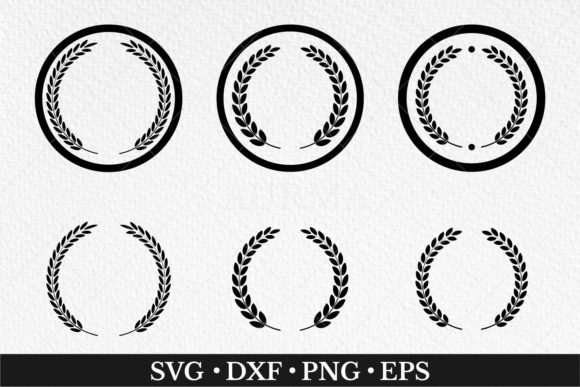
Laurel Wreath lands with a soft authority. It’s not fussy or overly ornate — no tiny scrolls or fragile tendrils that vanish under thread. The leaves are balanced, slightly asymmetrical (in the best way), and arranged with breathing room inside the circle frame. That subtle organic rhythm tells me this wasn’t auto-generated; it was shaped by someone who understands how leaf veins translate into satin stitch flow and how negative space affects fill stitch clarity.
It reads as timeless — think graduation gifts, wedding keepsakes, or a small-batch kitchen towel line for a heritage-themed shop. Not trendy. Not dated. Just right for handmade product storytelling.
How It Stitches: Where Laurel Wreath Shines (and Where It Asks for Care)
I tested Laurel Wreath on three real project types: a medium-weight cotton tote bag, a French terry sweatshirt, and a linen baby bib. Here’s what held up — and what needed attention.
- On stable fabrics like canvas, quilting cotton, or midweight linen: It stitched cleanly at 4–5 inches wide. The outer leaf edges stayed crisp, and the inner curve of the circle frame held definition without puckering. Perfect for tote bag designs, pillow covers, or tea towels where customers expect precision.
- On textured or stretchy fabric (like fleece or jersey): Required medium-cutaway stabilizer and reduced top tension. The design’s open structure helped — no dense fill zones to amplify distortion — but I’d avoid placing it near seams or curved hems unless pre-stabilized thoroughly.
- For baby embroidery or delicate items: Worked beautifully at 3 inches when paired with 40-weight rayon and tear-away stabilizer. No sharp points or tight corners that could irritate sensitive skin — a quiet win for nursery decor or personalized baby blankets.
Where caution matters: Laurel Wreath isn’t built for sub-2-inch hoops. Tiny inner details (like the subtle veining hinted in the SVG) won’t resolve in thread at that scale. And on dark fabric? Test your thread contrast early — light olive or sage greens read clearly, but pale golds can disappear unless you add an underlay or switch to matte metallic.
A Real Project Moment: The Boutique Sweatshirt Launch
Last month, I used Laurel Wreath as the centerpiece for a small-batch embroidered sweatshirt line for a local herbal apothecary. We placed it centered on the chest, sized to 4.25 inches, with a single-line script name beneath. Customers responded immediately — not just to the botanical theme, but to how *finished* it felt. No floating threads. No “digital flatness.” Just clean, confident craftsmanship.
That’s Laurel Wreath’s strength: it supports intention. It doesn’t shout. It frames. Whether you’re embroidering a holiday gift tag, an award patch for a community garden, or a subtle logo alternative for your craft business, it adds gravitas without clutter.
What This Means for Your Craft Business
If you sell on Etsy or run a small shop, presentation is trust. Laurel Wreath helps you deliver that. Its balanced proportions scale well across mockups — whether you’re showing it on a printable pillow cover preview or a cap embroidery comp. It doesn’t compete with text or photos; it complements them.
For digital product sellers: yes, it works as a standalone design asset. But don’t treat it like clipart. Its value lies in how thoughtfully it integrates — as a border for a monogrammed tea towel set, a framing element around a custom quote for nursery wall art, or the unifying motif across a seasonal collection of embroidered patches.
Practical Designer Notes Before You Stitch
Before adding Laurel Wreath to your next embroidery project, take these five minutes:
- Run a test on scrap fabric matching your final project’s weight and texture — especially if using textured, dark, or stretchy material.
- Check stitch density visually in your embroidery software. Look for areas where fill stitches might crowd too tightly near leaf tips or inner curves.
- Confirm hoop size compatibility. If your machine maxes out at 4x4, resize thoughtfully — don’t force detail into cramped space.
- Review licensing. Since Laurel Wreath is listed as a Graphics file in the Decorative Elements category, verify commercial use rights before selling finished embroidered goods or bundling it into digital product kits.
- Try a black-and-white mockup. Does the shape hold up without color? If yes, you’ve got a versatile, brand-safe asset.
Final Thought: Not Just Another Wreath
There are hundreds of wreath SVGs online. Laurel Wreath stands apart because it was designed *for stitching*, not just cutting. Its rhythm supports satin stitch directionality. Its spacing respects thread build-up. Its simplicity invites customization — swap one leaf for a tiny initial, add a minimalist bow, or layer it subtly behind a handwritten phrase.
Whether you’re an Etsy seller building a cohesive product line, a hobbyist stitching heartfelt gifts, or a small shop owner refreshing your branding, Laurel Wreath doesn’t ask you to adapt to it. It adapts — gracefully — to your voice, your fabric, and your customer’s expectations of quality.
That’s not just good design. That’s reliable design.